


For Slovaks, traditional Slovak cuisine is simply the best in the world. The dishes we grew up eating stay with us forever—flavors tied to childhood, family, and home. Tasting them again brings back a deep sense of comfort, nostalgia, and connection to the ingredients and recipes passed down from our grandparents. So what makes Slovak cuisine unique, and how does it hold up on the global stage?Despite its relatively small size, Slovakia is incredibly diverse, and its cuisine reflects that variety. Traditional Slovak food was heavily shaped by neighboring cultures, especially during the Austro-Hungarian era, which is why many dishes share roots with Czech, Hungarian, and Austrian cooking.
Liptov and Northern Slovakia
Northern Slovakia is known for harsher weather, long winters, and heavy snowfall, and that climate deeply influenced the local cuisine. Traditional meals in this region are built around smoked meats, potatoes, sauerkraut, flour, legumes, and dairy products. These were practical ingredients with long shelf lives—foods people could prepare and store before winter arrived. Thanks to livestock farming, milk and dairy products were available for much of the year. Fermented sauerkraut, prepared in the fall, provided an essential source of vitamin C during the colder months. Potatoes, typically harvested in October, became a staple food for surviving the long winter season. Among fish, trout was especially popular, while forested regions also relied on wild mushrooms, berries, and game meat. Beekeeping and honey production have long traditions in northern Slovakia as well.
Southern Slovakia
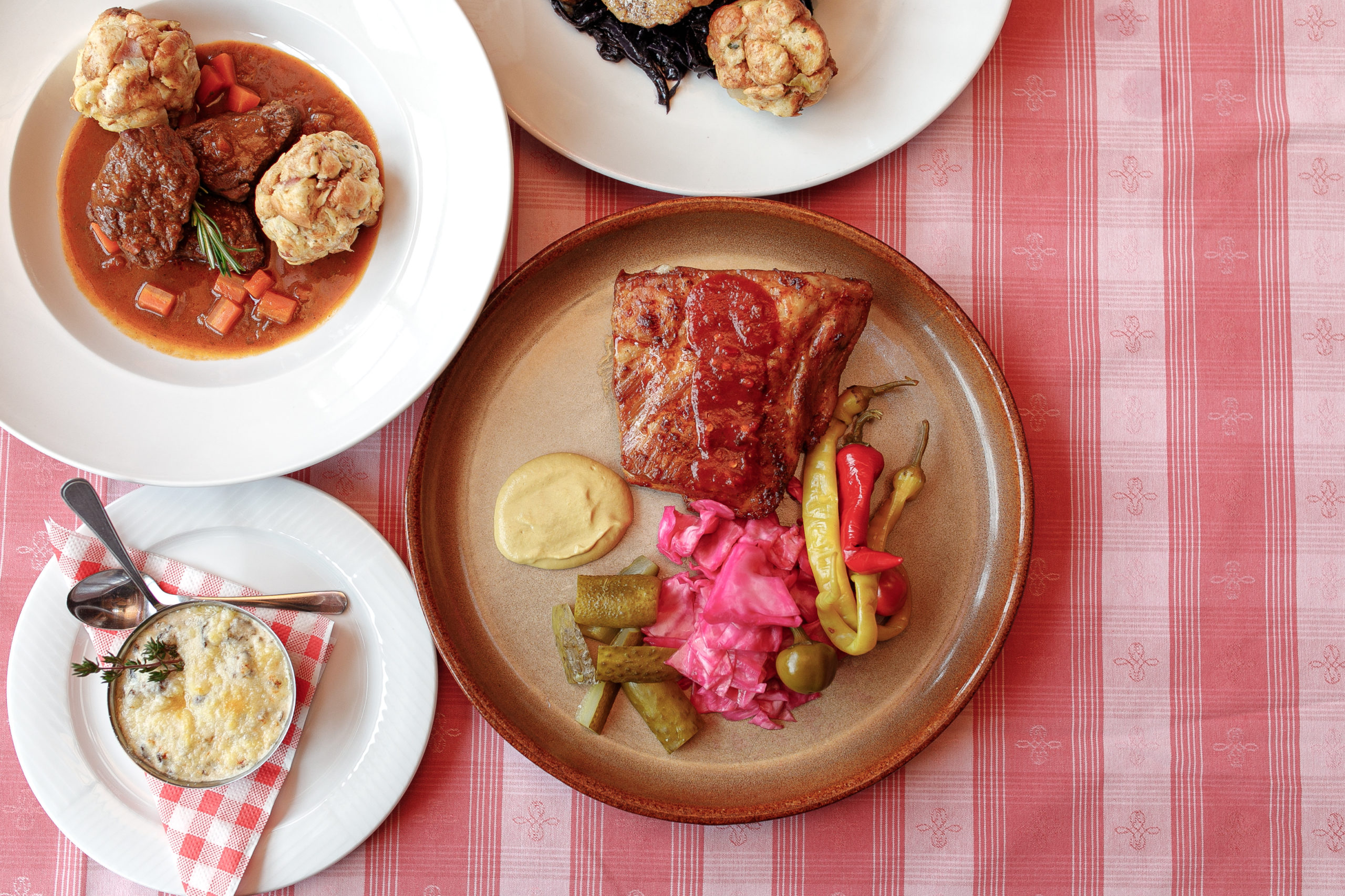
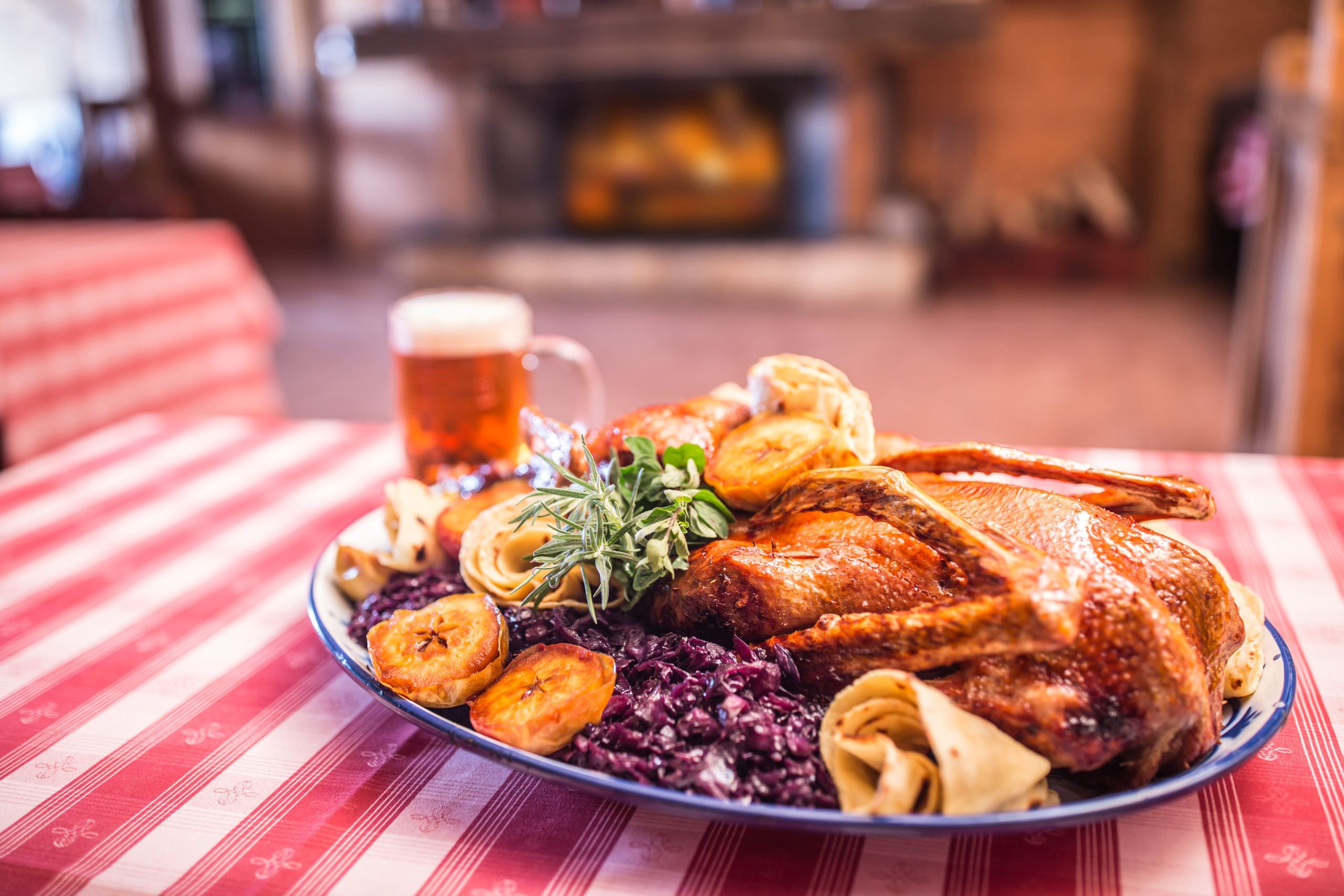
In southern Slovakia and the country’s lowland regions, the range of available ingredients was even richer. Traditional feasts, especially in the fall, often centered around roast goose and duck—dishes that are still considered true delicacies today. The milder southern climate also created ideal conditions for fruit growing. Preserves like plum jams, dried fruit, and canned fruit became essential ingredients in many traditional recipes. These sweet staples continue to play an important role in Slovak desserts, from crepes to pastries and other homemade treats.
Within Reach of Hungary and Austria
Slovak cuisine was also strongly influenced by its proximity to Vienna and neighboring Hungary. Bratislava and western Slovakia, in particular, developed as a culinary crossroads where Austrian, Hungarian, and Slovak traditions blended together. Over time, many foreign dishes were “Slovakized” and became part of the national food identity. Wiener schnitzel is now a holiday table staple in countless Slovak homes, while goulash—despite its Hungarian roots—is deeply embedded in Slovak gastronomy. The same goes for several Czech classics, such as svíčková, which have also found a lasting place in Slovak cuisine.
A Place Among the Best
Traditional Slovak cuisine earned an impressive spot in the prestigious TasteAtlas Awards 2022 rankings. Competing against cuisines from around the globe, Slovakia placed 50th—an unexpectedly strong finish that secured its place among some of the world’s most celebrated food cultures. Italy claimed the top spot, followed by Greece in second and Spain in third, but Slovakia’s presence on the list proved that the recipes of our grandmothers can absolutely hold their own on the world stage. For travelers, Slovak cuisine isn’t something to shy away from—it’s something worth discovering. Among the standout Slovak specialties highlighted in the rankings were parenica, Orava braided cheese, Zázrivá string cheese, lokše, goulash, kapustnica, and of course, the iconic bryndzové halušky. If you’re ready to rediscover traditional Slovak cuisine, you won’t be disappointed. Classic flavors remain just as unforgettable today, blending rich heritage with timeless comfort. Come experience the dishes that generations have loved—and take a delicious trip back to simpler times.