

Do you love the beauty of Slovak nature and enjoy walks in the forest? Just remember that the forest is foremost home to wildlife, and humans are only visitors here. In this article, we’ll outline a few basic rules for behaving responsibly in the Low Tatras National Park.
Visitor Rules
The visitor rules are something like a guiding principle for everyone entering the Low Tatras National Park and its buffer zone. This document defines trail closures, levels of protection, and summarizes all permits and restrictions. If you visit the Low Tatras regularly, you probably already know these rules. But if it’s your first trip, it’s worth reading them in advance to avoid potentially dangerous situations—or a hefty fine from park officers.
Respect trail closures and follow marked hiking paths
Visitors to NAPANT have access to more than 840 kilometers of marked trails and 15 educational nature paths. Despite this, some people still break the rules and wander off marked routes, disturbing wildlife, increasing the risk of encountering bears, and raising the chance of getting lost in the forest. As the visitor regulations clearly state: “In the national park area, visitors may move only along marked hiking trails and educational paths, and only during daylight hours—from one hour after sunrise to one hour before sunset; this restriction does not apply to the surroundings of recreational areas.” In addition, visitors are required to respect all trail closures. Camping, pitching tents, or bivouacking outside designated areas is strictly prohibited.
Leave Only Footprints, Take Only Memories
Do not leave any trash in the forest. Waste like plastic bottles, food packaging, or tissues can be dangerous for wildlife, which may mistake it for food. Always carry a small bag for your trash and take everything back with you. Do not pick plants, flowers, or mushrooms unless it’s explicitly allowed. The forest is their home, and removing them disrupts the natural balance.
Build fires only in designated areas
Lighting a fire in the forest is only allowed in designated areas. Fire can easily start a wildfire, which would have devastating consequences for the entire ecosystem. If you do make a fire in an approved location, always make sure it is completely extinguished before you leave. This is especially important during dry periods in coniferous forests, which make up most of the Low Tatras National Park—because even a small spark can quickly turn into a natural disaster.
Encounter with a Bear
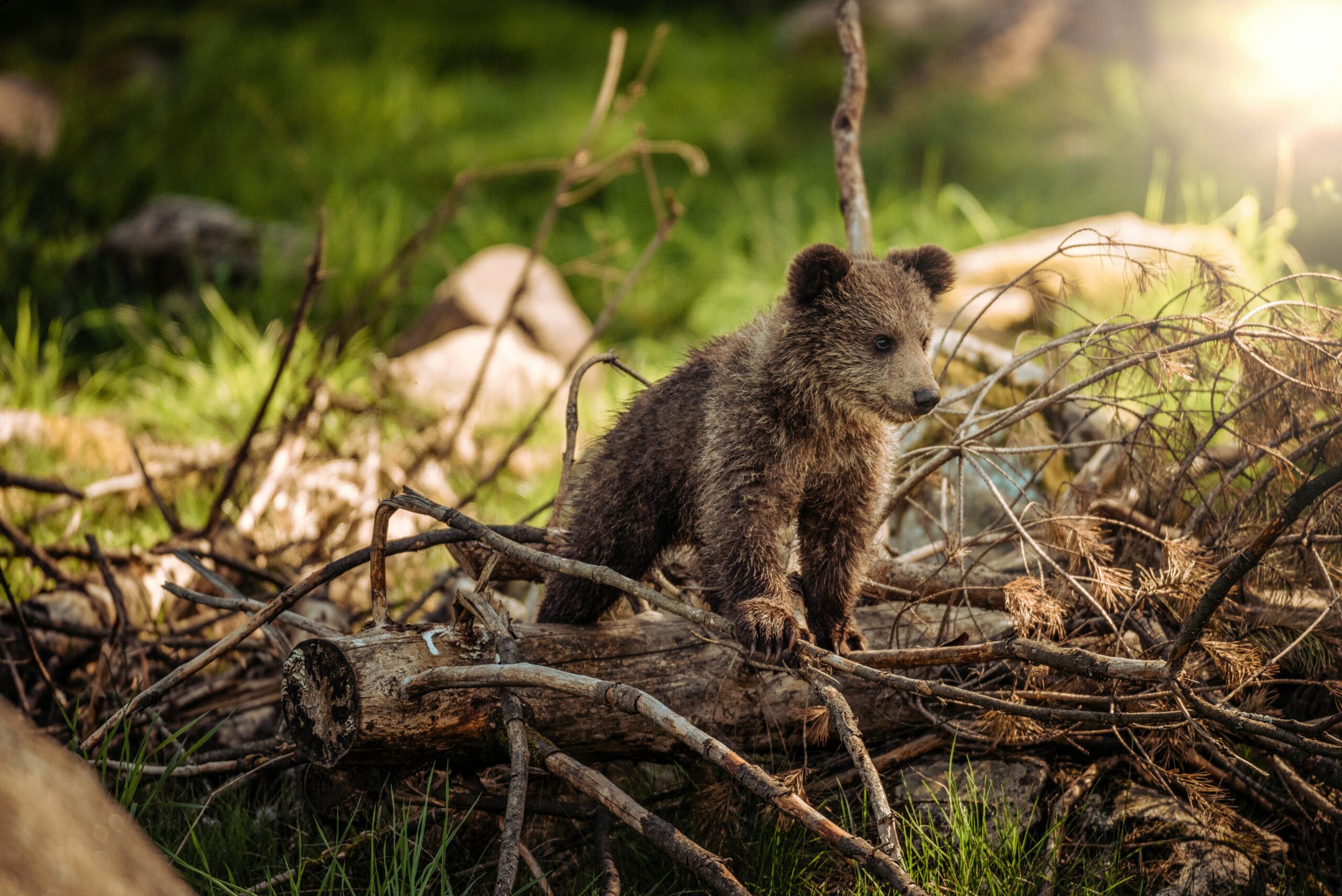
Even in the Low Tatras, you may come across Slovakia’s largest wild predator—the brown bear. As a precaution, it’s a good idea to carry bear spray, which can help deter an animal during a close encounter with a strong, irritating cloud. If you meet a bear in the forest, stay calm, don’t panic, and never run. Slowly back away while speaking in a calm, steady voice. If the bear comes closer, use the spray. Try to appear larger and make your presence known, but never approach the animal. If a bear attacks, the recommended defensive response is to lie face down on the ground and protect your neck. Although this sounds frightening, bears are naturally shy animals and generally avoid human contact. Attacks are very rare and usually a last resort.
Mountain Rescue Service and Mountain Insurance
If you get lost despite following all the rules, are caught in bad weather, or suffer an injury, it’s good to know that the Mountain Rescue Service is available 24/7 at the emergency number 18 300. Rescue teams are always ready to intervene and help hikers in distress. Since mountain rescue operations can be quite costly, don’t forget about mountain insurance. You can arrange it year-round or simply get coverage for the specific days of your holiday.